You pull into the station on your way to work, hand over the keys, and two minutes later the technician tells you the car can’t be tested. Not failed. Not ready. The engine is running better than it has in months, the dash is clear, and you still have nothing to show the tag office. If that has happened to you during emissions testing in Decatur GA, the car is almost certainly fine. What’s missing is a set of self-tests your vehicle has to finish on its own before Georgia’s system will accept a result at all.
Here’s what “not ready” means, why a fresh battery or a recent repair causes it, and how to get ahead of it before your DeKalb County registration comes due.
“Not Ready” and “Failed” Are Two Different Results
A failure means your car was tested and it reported an emissions problem. “Not ready” means the test could never be completed in the first place. The inspection software looked at your vehicle’s computer, found that the required self-checks hadn’t finished running, and stopped there.
Georgia’s Clean Air Force calls “not ready” one of the most common reasons drivers walk away without a passing result. It’s frustrating precisely because nothing feels wrong with the car, and nothing has to be wrong with it. The vehicle just hasn’t gathered enough evidence about itself yet.
What OBD Readiness Monitors Actually Are
Every 1996 and newer vehicle has an on-board diagnostic system built into it, and that computer quietly runs its own emissions self-tests while you drive. Those self-tests are the OBD readiness monitors. They check the catalytic converter, the evaporative emissions system that keeps fuel vapor contained, the oxygen sensors, and other emissions hardware.
Emissions testing in Georgia reads those stored results rather than sampling what comes out of the tailpipe. Your car has already graded itself, and the station is essentially reading the report card. When a monitor hasn’t completed its check, there’s no grade for that system, so there’s nothing to hand in.
Some of those monitors run continuously. The comprehensive component monitor, the misfire detection monitor, and the fuel system monitor are watching all the time, so they report ready almost always. The rest only run when specific conditions are met: a certain speed held for a certain stretch, a certain temperature, a certain amount of fuel in the tank. Those are the ones that hold up a test.
Why a New Battery Can Cost You a Test
This is the surprise that catches the most people out. Disconnecting or replacing the battery erases the memory in your car’s computer, and that memory includes the stored monitor test results along with any trouble codes. The car wakes up with a clean slate and no self-test history.
Georgia’s Clean Air Force lists a recently disconnected or replaced battery as a leading cause of a not ready result, and it lists a battery in a low state of charge right alongside it. So a weak battery you’ve been nursing along can produce the same outcome as a brand new one.
Picture a driver near S Hairston Rd who swaps a dying battery on Saturday morning and heads to a testing station on Monday. The car starts instantly, runs beautifully, and gets turned away. Nothing broke. The computer just hadn’t been given enough driving to redo its homework.
Cleared Codes After a Repair Do the Same Thing
There’s a real irony here. The car most likely to read not ready is the car that was just repaired correctly.
When a shop fixes an emissions-related problem, it clears the diagnostic trouble code with a scan tool so the check engine light goes out. Clearing those codes resets all of the OBD readiness monitors back to zero. Georgia’s Clean Air Force specifically names a recent service where a scan tool was used to clear code information as a cause of a not ready result.
So the oxygen sensor replaced last week is doing its job perfectly, the light is off, and the car still can’t be tested today. It needs driving time first.
Georgia’s Clean Air Force also names one cause that has nothing to do with the battery or a recent repair: an OBD computer that needs a software update. That one is worth knowing about, because more driving on its own will not resolve it, and it takes a look at the vehicle to identify.
The Drive Cycle That Sets the Monitors
The fix isn’t a repair. It’s a pattern of driving, sometimes called a drive cycle, and Georgia’s Clean Air Force is specific about what helps:
- Keep the fuel tank between roughly a quarter and three quarters full. Some monitors, especially the evaporative system check, won’t run outside that window.
- Let the car sit long enough for a true cold start, meaning the engine has been off for around eight hours.
- Then drive normally for one to two weeks, and make sure some of that driving is highway driving.
That last point matters more than most drivers expect. Ordinary, varied driving is what sets the monitors. No shop can press a button to mark them complete, and there’s no legitimate shortcut. Depending on the vehicle, everything can take several days or a couple of weeks to report ready.
Why Short Decatur Commutes Take Longer
If your driving is mostly short hops around Decatur, Lithonia, Stonecrest, Ellenwood, or Stone Mountain, you can drive for weeks and still have incomplete monitors. Stop-and-go trips of a few miles never give the engine a long enough stretch at a steady speed for certain checks to run.
Drivers who mix in some I-20 or I-285 miles usually get there faster. Those same short trips are hard on fuel economy, and the simple maintenance habits that help you save money at the pump also keep the engine running the way the monitors expect. If your normal week is school runs, a short commute, and errands around the neighborhood, plan on adding a few longer drives before you test rather than assuming the calendar is enough.
What a Check Engine Light Means for Your Test
Readiness and the check engine light are two different gates, and both have to be clear.
If the “Check Engine” or “Service Engine Soon” light is on, the vehicle won’t pass the inspection, no matter how many monitors are complete. That isn’t a judgment call at the station. It’s how the program works.
The good news is that a lit lamp doesn’t always mean a major repair. Georgia’s Clean Air Force points out that something as minor as a loose fuel cap can trigger it. Tighten the cap until it clicks, drive the car, and the light may turn itself off.
If it doesn’t, that’s the moment to have the code read rather than guess. A check engine light in Decatur GA can mean a five-minute fix or a real emissions repair, and the only way to tell them apart is to pull the code and look at what the computer is actually reporting. Our auto repair and tune-up services start with that diagnosis, and if a repair is needed, ask us for a current quote before anything gets done so you know what you’re agreeing to.
Get a Pre-Test Scan Instead of Guessing
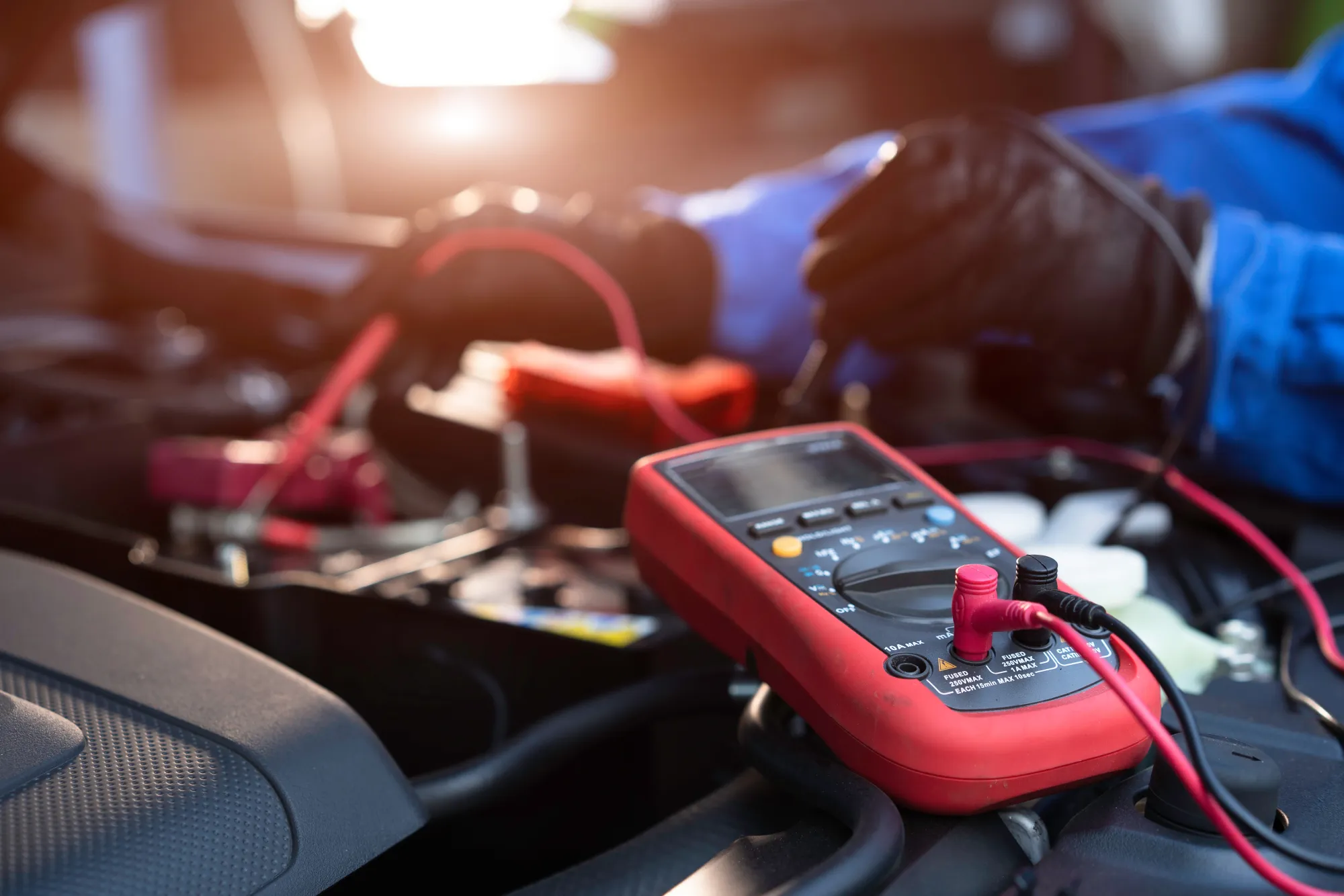
Monitor status is readable in minutes with a scan tool, which is why guessing is the expensive part of this. Rather than searching for emissions testing near me and hoping for the best, have a local shop scan the car first. That scan tells you which monitors are complete, which are still pending, and whether any codes are stored, before you spend a trip to a testing station and get turned away.
A scan answers the questions you’d otherwise be guessing at:
- Are the OBD readiness monitors set, or do you need another week of driving first?
- Is there a stored code waiting to light the dash before you get there?
- Is something actually wrong, hiding behind a monitor that keeps failing to complete?
Guessing costs you a trip and, if your renewal is close, some genuinely uncomfortable timing. A scan costs you a short visit.
Timing Your DeKalb County Emissions Test Around Your Renewal
DeKalb County is one of thirteen metro Atlanta counties where annual emissions testing is required, along with Cherokee, Clayton, Cobb, Coweta, Douglas, Fayette, Forsyth, Fulton, Gwinnett, Henry, Paulding, and Rockdale. Most gasoline vehicles under 8,500 pounds and less than 25 model years old need a test each year. The three newest model years are exempt, and so are vehicles 25 model years or older, which for 2026 registrations means 2024 and newer or 2001 and older.
Your renewal date is your birthday, and Georgia’s Clean Air Force recommends testing four to six weeks before it. That window exists for exactly the situations described above. If the car reads not ready, you have room for a week or two of driving and a retest. If something does turn up, you get one free retest by returning to the same station within 30 calendar days of the original inspection. A passing result is good for 12 months or one registration renewal by the same owner.
Test in the last week before your birthday and all of that cushion disappears. That’s when a not ready result stops being a nuisance and starts being a problem. Small fleet operators feel this hardest, because several vehicles can come due in the same stretch of weeks and every one of them needs its own driving time before it can be tested.
A Simple Plan If You Were Just Turned Away
If a station told you your vehicle was not ready this week:
- Don’t clear anything or disconnect the battery. That restarts the clock.
- Keep the tank between about a quarter and three quarters full.
- Drive normally for one to two weeks, including some highway miles.
- Come in for a scan to confirm the monitors are set before you go back.
- If a code shows up, get it diagnosed rather than waiting it out.
That sequence turns an unpredictable errand into a short, known process.
Champs Tire & Service Can Check Before You Go
Champs Tire & Service serves drivers across DeKalb County from two Decatur locations, on Flakes Mill Road and S Hairston Rd, convenient to Lithonia, Stonecrest, Ellenwood, and Stone Mountain. We can scan your vehicle’s OBD readiness monitors before your DeKalb County emissions test, read any stored codes, and tell you plainly whether you’re ready to go or need another week behind the wheel. If a repair is what stands between you and a passing test, we’ll explain what it is and why, in language that makes sense.
We don’t publish repair prices, because parts and labor change and a stale number helps nobody. Tell us what your vehicle is doing and request a current quote, and you’ll get a real answer for your car rather than a guess from a blog post.